Listen Now in 18mins
For about nine years from 2009, I worked at University College London Hospital. For part of that time I was department manager for gynaecology and maternity.
My days looked like this: personal training and nutrition clients early in the morning, a full day running the department, then more clients in the evening.
It was exhausting.
It was also the best education I could have asked for, because it put me in a room with some of the best clinicians in the country every week.
The question?
Every Tuesday the endocrinology and gynaecology teams held a multidisciplinary meeting to discuss patients who crossed both specialties. I was there for the operational side, making sure patients got seen and the plan actually happened.
By then the teams knew me well. They knew I coached women outside the hospital, and some of them referred patients to me once the medical treatment was done and it was time to change how they lived.
So at the end of one meeting, when someone asked if there were any other questions, I said I had one that had been bothering me for years.
"How do you balance hormones?"
Everyone froze. Pens stopped moving. Then one of the consultants asked if it was a real question.
It was.
For years I'd heard that phrase all over the fitness and wellness world. Clients would come to me, do the work, and not get the results we expected.
They'd tell me they were seeing their doctor, maybe taking medication, but nothing conclusive came back. So I went looking.
I spent late nights reading studies on hormones and metabolism in women, and I kept hitting the same wall: metabolism is incredibly robust.
It's like an old car that keeps running whatever you throw at it. The research on metabolic slowdown is fairly clear about what happens and by how much, and you can adjust for it.
So what was this hormone balancing everyone kept talking about? I had some of the best consultants in the world in one room. I figured I'd ask.
It's not a real thing
The head of the IVF service looked straight at me and said that if I ever used that phrase in their meeting again, I'd be banned, and they didn't care what happened to the running of the hospital.
She was joking. Mostly.
Then she explained. Hormones are never balanced.
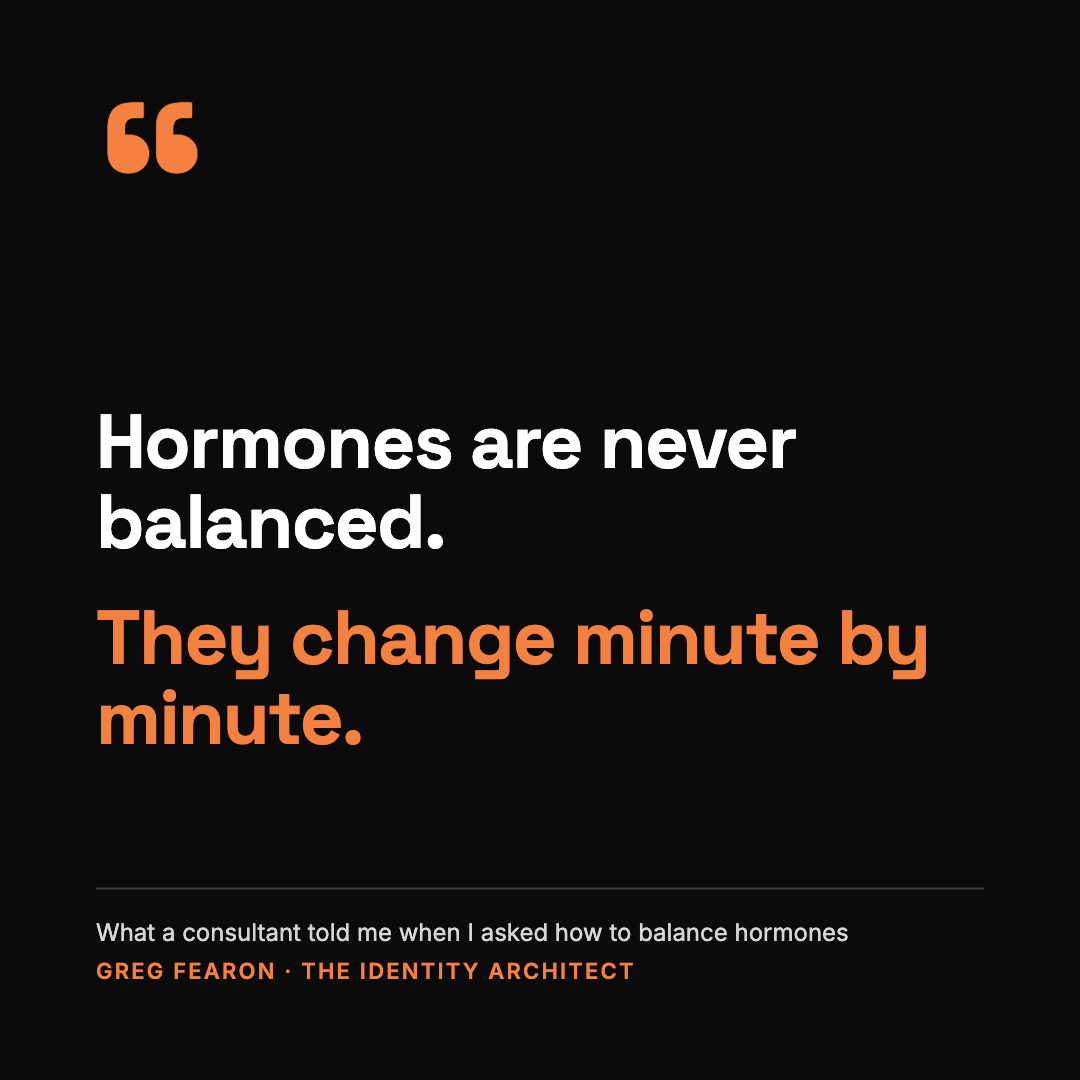
They change constantly, almost minute to minute, depending on what's happening in your body and your brain.
Gaps in care had left a lot of women without answers, she said, and a market had grown up to fill that gap with the promise of "balancing your hormones".
She told me to go and look into it properly.
So I did. I asked a few functional wellness practitioners I knew to walk me through their programs.
Labs first, then a plan.
And what was the plan? One of them almost whispered it: "Honestly, Greg, it's pretty much the diet you'd help them with. Eat well, not too much, not too little. Move more. Sleep more."
I was stunned. For years there had been this mystique that women were fragile, that hormones were some hidden switch controlling everything, and that someone out there held the secret.
Underneath it was the same advice a good personal trainer gives, sold back to women in different packaging.
To be clear, hormonal conditions are real. I've worked with clients living with thyroid conditions and other diagnoses that make life genuinely hard, and they need proper medical care.
But the idea that a secret hormone fix is standing between you and the body you want is a story. It isn't a fact.
If it's not hormones, what is it?
That conversation changed how I coached. I started to see that diet and exercise were rarely the real problem for the women I worked with. Even when doctors referred patients to me, I'd tell them it wasn't their diet. It was something deeper.
Usually it starts here: you don't really know what you want, and what you do want doesn't mean enough to you yet to make you change.
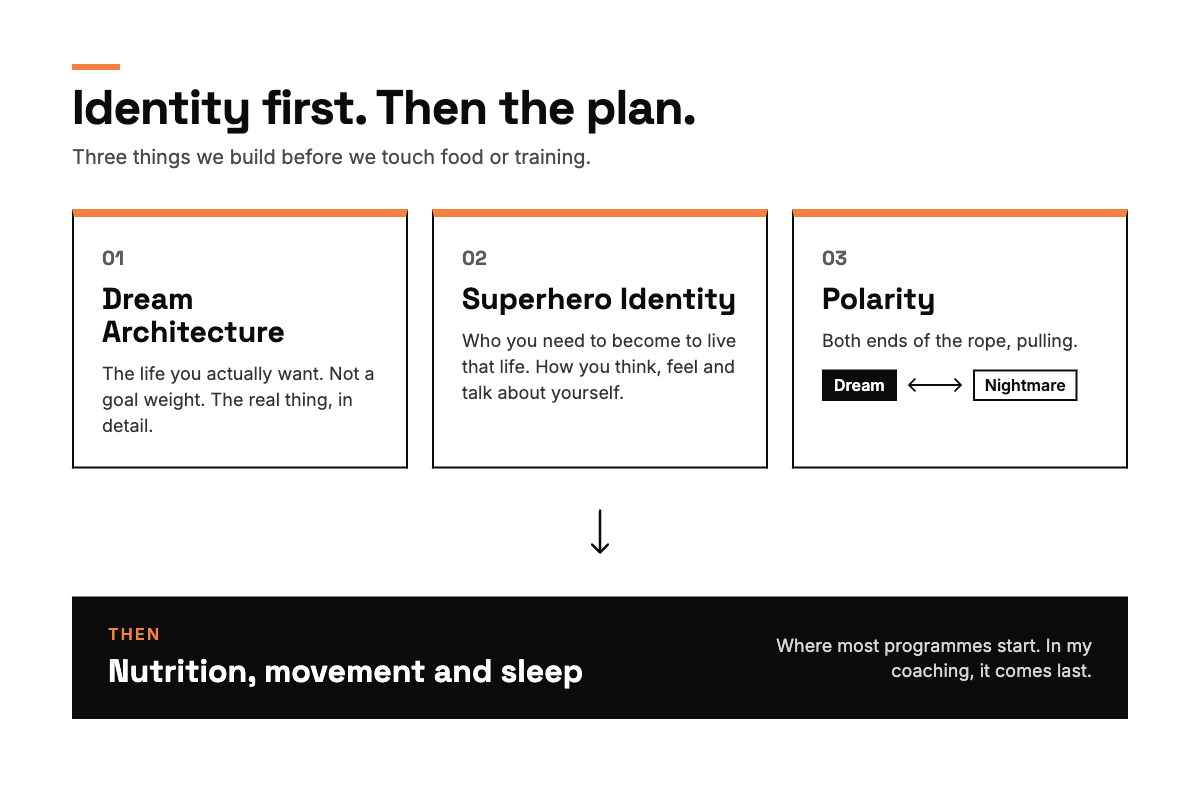
So before we touch food or training, we build three things.
Dream Architecture. What's the life you actually want? Not a goal weight. The real thing, in detail.
Superhero Identity. Who do you need to become to live that life? The way you're living now, and who you're being, isn't getting you there. So we work on how you think, feel and talk about yourself.
Polarity. What's the life you never want to end up living? Your nightmare. People move towards what they want and away from what they fear, and you need both ends of the rope pulling.
When I put these in place first and then brought in the nutrition and training, results got much better.
Same pattern, different room
I had a client who wanted to eat healthily, and her family wasn't supporting her. That was the problem, as she saw it.
Then one session she mentioned her boss. Frustrating, she said. He just wouldn't listen to her.
I stopped her and said I thought I knew why her family wouldn't change. The same thing was happening at work and at home: she wasn't making her case strongly enough for people to listen.
She went quiet. Then she told me she'd always been the quieter one of her siblings, the one who got talked over.
That was the real issue, and you can't fix it with a better meal plan. So she took a course on speaking with confidence, and at the same time we built out her Superhero Identity, her Dream and her Polarity. Then I asked her to call a meeting with her family and tell them what she wanted and why.
She did. She told them that losing weight would mean fewer hospital visits and fewer medications, that she wanted to go to the beach without worrying what she was wearing, and that she wanted more confidence at work. Her family were surprised. They'd never understood what it meant to her. Her husband asked what they could do to help.
She lost around 30 pounds and dropped two or three dress sizes. The bigger change was her confidence. She'd always been smart and capable. Once she started speaking up for herself, everything moved.
It was never her knowledge of nutrition. It was a pattern that showed up in her health, her family and her career. Left alone, it would have cost her another year of trying and not doing, another year of not running around with her kids, another year of hospital appointments eating into her working life.
It's not your hormones
If you've been told your hormones need balancing and you've spent money trying, hear this: for most women, hormones aren't what's keeping them from the body and life they want. Identity is. The beliefs you hold about who you are, and the patterns that repeat in every part of your life.
Health is usually where those patterns show up first, which makes it the best place to start.
Find your pattern: the Identity Health Audit
If you want to find out what's actually going on, I've opened spaces for an Identity Health Audit. You fill in a short questionnaire, we spend 45 to 60 minutes on a call, and within 24 hours you get a written report with the one to three things you can start on straight away. If you want to talk about working together after that, we can. If not, you'll still leave knowing what your pattern is.
It's $97. Book your Identity Health Audit